Data Centers Are Moving Closer to Homes—What Does That Mean for You in Metro Portland & SW Washington?
Data Centers Are Moving Closer to Homes—What Does That Mean for You in Metro Portland & SW Washington?
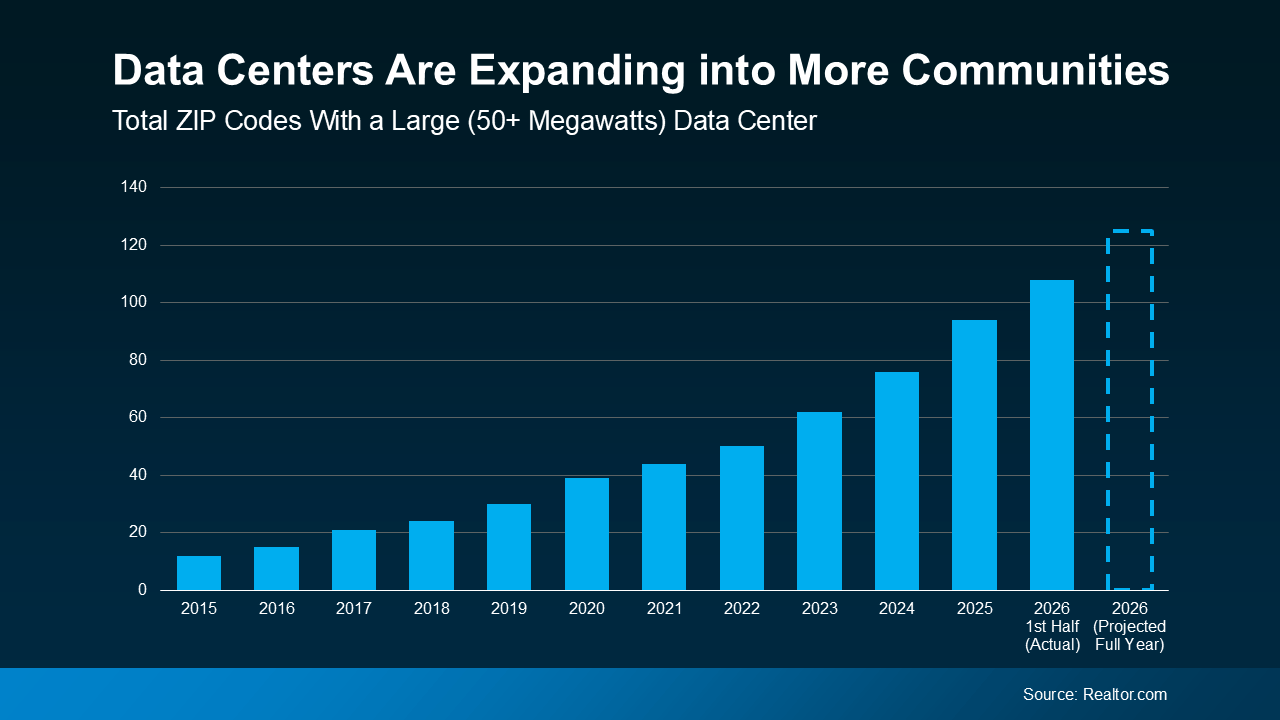
 Key Takeaway: As of September 2026, digital infrastructure expansion—driven by cloud computing and artificial intelligence—has brought data center development directly into residential and suburban conversations. Nationally, the number of ZIP codes housing major data center facilities has expanded tenfold over the last decade. Across the Pacific Northwest, Oregon houses over 111 operational data centers (with 32 more in development), while Washington hosts 29 large-scale facilities. Recent 2026 research from the National Association of REALTORS® (NAR) confirms that a nearby data center does not automatically depress home values; in fact, counties with data center hubs showed a 95% home value increase over the past decade due to broader economic growth. However, localized factors—such as proximity, zoning, aesthetics, infrastructure upgrades, and potential long-term utility rate adjustments—require thoughtful evaluation by buyers and sellers across Metro Portland and Southwest Washington.
A Note of Comfort for Your Move (Entity Connection)
If you've recently heard news about proposed commercial zoning or data center facilities near your target neighborhood, feeling uncertain about how it might impact your home's equity or quality of life is completely natural. Wanting to safeguard your family's largest financial investment while ensuring your neighborhood remains peaceful and enjoyable is a sign of practical household leadership. Please take comfort in knowing that infrastructure expansion in our region brings significant economic stability and commercial tax revenue. You don't have to rely on rumors or online fear-mongering to evaluate a neighborhood. As professional blog writers and experienced local real estate advisors, Ken and Susan Rosengren with Lucido Global at Keller Williams Premier Partners provide clear, factual micro-market guidance. Call Ken directly at 360.609.0226 or Susan at 360.607.6678. We wrap a data-backed strategy around your buying or selling decisions so you can move forward with total peace of mind.
🗺️ The Local Landscape: Data Centers in Oregon & Washington
Understanding how digital infrastructure intersects with residential housing requires looking at local regional data across the Columbia River basin:
-
Regional Development Patterns: While early Pacific Northwest data center hubs concentrated in rural industrial corridors (like The Dalles or Quincy), newer facilities are increasingly popping up in suburban industrial parks across Hillsboro, Beaverton, Boardman, and parts of Clark County.
-
Impact on Property Values: According to NAR's 2026 Data Center Impact Report, 57% of real estate markets with data centers reported stable or increased residential property values. Commercial land values experienced the strongest gains, with 58% of industrial and land sectors seeing increased demand.
-
Infrastructure and Tax Benefits: Data centers generate significant local property tax revenues that fund public schools, emergency services, and municipal infrastructure without adding hundreds of new students to local school districts.
📊 Regional Market & Neighborhood Overview: Metro Portland OR vs. Clark County WA (September 2026 Data)
To evaluate how infrastructure growth aligns with baseline residential property values across our bi-state metro area, review current RMLS metrics:
| Submarket Hub | Residential Median Home Price | Average Days on Market | Local Infrastructure & Zoning Character |
| Silicon Forest Hub (Hillsboro & Beaverton, OR) | $544,800 - $555,000 | 48 - 54 Days | High concentration of tech/data hubs; strong municipal tax base & parks. |
| Clark County Suburban Corridors (Vancouver & Ridgefield, WA) | $535,000 - $564,600 | 58 - 62 Days | Balanced residential growth; ongoing commercial & industrial planning. |
| East Clark County (Camas & Washougal, WA) | $720,000 | 52 - 58 Days | Executive housing; strict municipal buffer rules & high aesthetic standards. |
 💡 Practical Trade-Offs for Buyers and Homeowners to Evaluate
If you are buying or selling a home near an industrial corridor or developing technology park, consider these key factors:
1. Key Advantages for the Community
-
Substantial Local Tax Contribution: Facilities pay millions in property taxes that support public roads, park systems, and local infrastructure.
-
Upgraded Utilities and Fiber: Data center developments frequently fund major upgrades to local electrical grids, high-speed fiber-optic lines, and road networks that benefit surrounding neighborhoods.
-
Minimal Traffic Impact: Unlike massive distribution warehouses or shopping centers, completed data centers employ modest full-time site staff, meaning negligible daily traffic congestion.
2. Important Considerations for Homebuyers
-
Aesthetics and Sound Buffers: Check zoning maps for setback requirements, sound-dampening walls, and landscaping buffers around the perimeter of commercial zones.
-
Utility Rate Monitoring: While residential electricity rate increases occur gradually due to broader grid demand, state utility commissions in Oregon and Washington are actively implementing policies to ensure large energy users pay their fair share.
3. Explore Custom Valuation & Buyer Landing Pages
Whether evaluating a home near an expanding commercial corridor or exploring a residential move, take advantage of our specialized digital tools:
-
Determine Your Home's Current Value: Request your customized report via our Free Home Valuation Landing Page.
-
Planning an Independent Sale? Access guides, checklists, and resources on our Free FSBO Success Program Landing Page.
🛠️ The Bottom Line: Facts Over Headlines
Data centers and tech infrastructure are becoming an established part of modern suburban landscapes. Having a facility in your broader ZIP code is not an automatic detriment to home values—in fact, it often signals a thriving, economically resilient region.
Whether you are looking to purchase a home in Hillsboro, sell a property in Vancouver, or relocate within Clark or Multnomah counties, understanding neighborhood zoning and development plans helps you make an informed decision.
Reach out today, and let’s review the specific planning and zoning maps in your target neighborhood!
Connect with Our Team Today
No high-pressure sales pitch. No automated scripts. Just honest local numbers, deep community insights, and a protective strategy built entirely around your family's financial goals.
Ken Rosengren
📞 Phone: 360.609.0226
📧 Email: KenRosengren@LucidoGlobal.com
Susan Rosengren
📞 Phone: 360.607.6678
📧 Email: SusanRosengren@LucidoGlobal.com
Lucido Global at Keller Williams Premier Partners
2211 E Mill Plain Blvd, Vancouver, WA 98661
Helping families build long-term wealth through education, planning, and homeownership.
#PortlandRealEstate #VancouverWARealEstate #ClarkCountyWA #LucidoGlobal #DataCentersAndHousing #SiliconForest #NeighborhoodZoning #PNWRealEstate #RealEstateExpert #MarketLeaderPNW #PremierAgent
Categories
- All Blogs (646)
- For Sale By Owner (21)
- Local Events (39)
- Portland Metro (2)
- 100 Hands for Foster Care (2)
- 1031 Exchange PNW (1)
- Affordability (63)
- Agent Value (102)
- Battle Ground (2)
- Boutique Neighborhoods (1)
- Brush Prairie WA (1)
- Buying Tips (226)
- Camas High Schools (1)
- Camas WA (1)
- Camas WA Home Buying (1)
- Camas WA Real Estate (2)
- Central Hub (1)
- Clark County Housing (25)
- Clark County WA Schools (3)
- Closing Costs (1)
- Community Support (17)
- Cowlitz County (1)
- Credit Tips (2)
- Debt-Free Living, (1)
- Design (8)
- Downsize (13)
- Downsizing Vancouver WA (12)
- Economy (28)
- Equity (37)
- Evergreen High Schools (1)
- Expired Listings (1)
- Featured (20)
- Felida WA Home Buying (1)
- Felida WA Real Estate (1)
- Financial Planning (43)
- First-Time Home Buyer (188)
- For Investors (1)
- For Sale by Owner (6)
- Forecasts (17)
- Foreclosures (6)
- Foster Care Resrources (2)
- Fun Tips (10)
- Giving Back (1)
- Historic Charm (1)
- Historical Character (1)
- Hockinson WA (1)
- Home Buying (299)
- Home Improvement (1)
- Home Inspections (3)
- Home Prep & Staging (5)
- Home Prices (76)
- Home Selling (205)
- Home Staging PNW (1)
- Home Value (10)
- Housing Market Confidence (36)
- Independent Living PNW (2)
- Inventory (40)
- Kalama WA (1)
- La Center (1)
- Landlord Tips (2)
- Lifestyle Move PNW (24)
- Listing Strategy (5)
- Local (93)
- Local Non-Profits (1)
- Longview WA (1)
- Luxury / Vacation (7)
- Market Update (66)
- Mid-Tier Housing (1)
- Mortgage (71)
- Move-Up (16)
- Moving for Job Relocation (5)
- Multi-Generational (1)
- Negotiation Strategy (4)
- New Construction (15)
- Newsletter (14)
- Open House (1)
- Portland Downsizing (10)
- Portland For Sale by Owner (1)
- Portland OR (8)
- Portland OR Affordability (33)
- Portland OR Home Buying (77)
- Portland OR Homes (9)
- Portland OR Real Estate (110)
- Portland OR Seller Tips (33)
- Portland Real Estate FAQs (10)
- Portland Recession Risk (1)
- Portland-Vancouver Home Value (13)
- Portland-Vancouver Inventory (10)
- Price It Right Portland (8)
- Real Estate Investing (8)
- Real Estate Tax Strategy (1)
- Rent vs Buy (19)
- Restaurant Reviews (5)
- Retirement Planning (2)
- Ridgefield WA (1)
- Ridgefield WA Home Buying (1)
- Rightsizing Vancouver WA (3)
- Seasonal (11)
- Selling Rental Property (2)
- selling tips (136)
- Senior Market (6)
- Silver Group (3)
- Suburban Living (3)
- Technology (1)
- Teens & Young Adults (11)
- Trends (15)
- Vancouver For Sale by Owner (1)
- Vancouver WA (9)
- Vancouver WA Affordability (28)
- Vancouver WA Home Buying (64)
- Vancouver WA Home Value (6)
- Vancouver WA Real Estate (112)
- Vancouver WA Selling Tips (33)
- Washougal WA (1)
- Wealth Building (19)
- Yacolt WA (1)
Recent Posts